
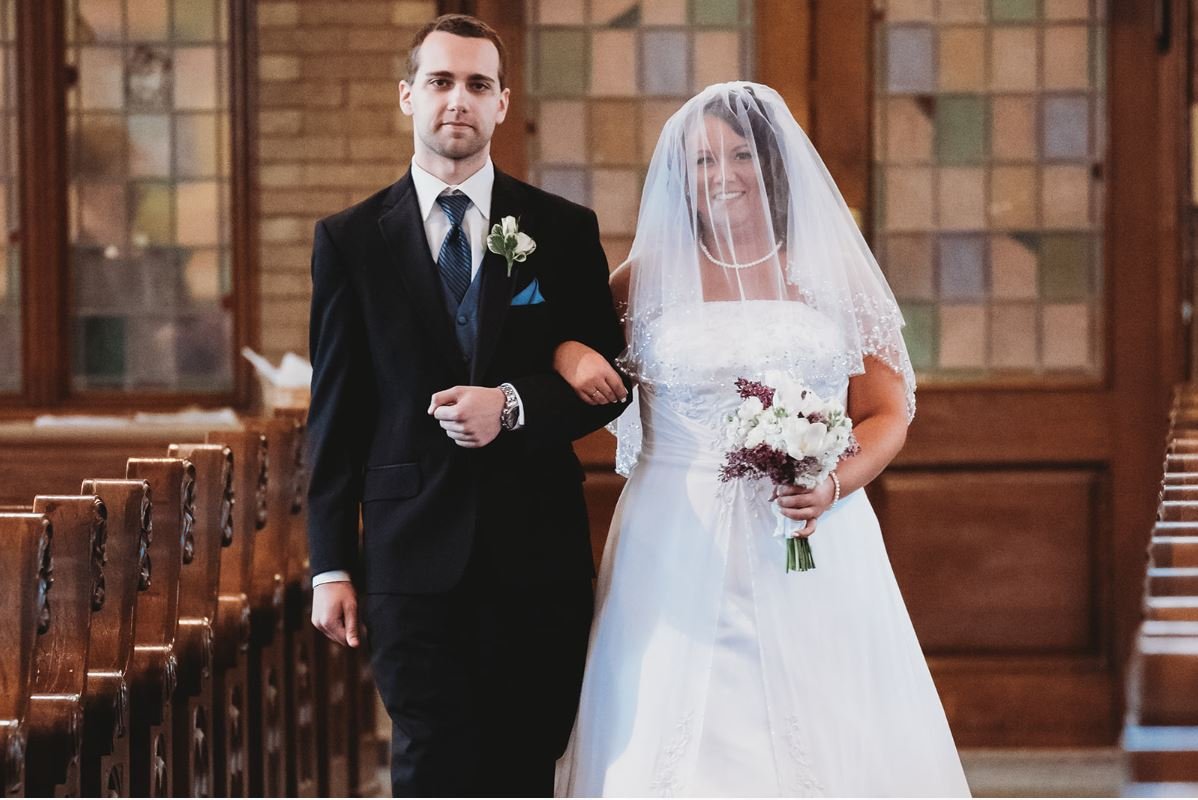
A 20-person wedding and a 180-person wedding cost roughly the same to photograph. The photographer works the same hours, edits a similar number of images, and carries the same equipment.
What changes is everything else. With 20 guests, the day has room in it. Nobody is being rushed between obligations. The photographer isn’t managing crowds. And the images that come out of it are different in a way that’s hard to describe until you’ve seen both.
Here’s what a micro-wedding actually does for the photography, and where it costs you something.
Time Is the Whole Advantage
A large wedding is a logistics operation. Every block is scheduled because 180 people have to be moved, fed, and seated in a fixed sequence.
A micro-wedding has slack. Family photos take eight minutes instead of forty. Cocktail hour doesn’t need a full sixty minutes because there are twenty people to serve. Nobody is waiting for a shuttle.
That reclaimed time goes somewhere, and the best place to put it is portraits and unstructured coverage.
What an Extra Ninety Minutes Buys
| Large Wedding Constraint | Micro-Wedding Alternative |
| 15 minutes of golden hour, stolen from dinner | 45 minutes, unhurried, at three different locations |
| One portrait location, chosen for proximity | Two or three, including one off-site |
| Family photos in 40 minutes | 10 minutes, everyone knows each other |
| Couple sees guests for 20 minutes total | Real conversations with every person there |
| Photographer manages crowds | Photographer observes people |
| Timeline padded for delays | Timeline can absorb a change of plan entirely |
That last row is the underrated one. A micro-wedding can adapt. If the light does something unexpected at 6:40, twenty people can walk outside. A hundred and eighty cannot.
Venue Options Open Up Dramatically
This is where the photography benefit compounds.
Rochester has a limited number of venues that hold 180 people. It has an enormous number of spaces that hold 25.
What Becomes Available
- Private dining rooms in good restaurants. Character, warm light, and no event-space blandness.
- Historic houses and small museums. Often unavailable to large weddings, accessible to small ones.
- Backyards and family homes. Personal, meaningful, and photographically distinctive.
- Small chapels and older churches. Buildings with real architecture that seat 40.
- Art spaces and galleries. Interesting walls, controlled light, unusual backdrops.
- Rented houses and cottages. The Finger Lakes region has many, and they photograph beautifully.
- Park pavilions and small outdoor sites. Permits are easier for small groups.
Every one of those produces more visually distinctive images than a standard event hall, because they weren’t designed to be neutral containers for 200 people.
The Getting-Ready Space Improves Too
Large weddings often mean a hotel block and a standard suite. Micro-weddings frequently mean a rented house with a proper kitchen, big windows, and rooms with character.
That’s a meaningful upgrade to the first three hours of your gallery, and it usually costs less than the hotel block.
The Guest Coverage Changes Completely
At a 180-person wedding, a photographer produces a sampling of guests. Some people appear in one frame. A few don’t appear at all.
At a 20-person wedding, every single guest appears repeatedly, in context, doing things. You get photographs of your uncle talking to your best friend. Of your grandmother watching the ceremony from four feet away.
That’s a categorically different record of who was there.
Ceremony Photography Gets Better
Small ceremonies are shot from closer, and closer is better.
At a large ceremony the photographer works from the back with a long lens, because moving is disruptive. At a 20-person ceremony they can be six feet away without anyone noticing, which means faces fill the frame and details are readable.
You can also do things structurally that don’t work at scale: a circle instead of rows, guests standing, no aisle at all. Each of those changes what images are possible.
The Cost Comparison
Photography pricing barely moves. Everything else does.
| Element | 20 Guests | 180 Guests |
| Photography | Similar or slightly less | Baseline, often needs a second shooter |
| Catering | Dramatically less | The largest single cost |
| Venue rental | Often much less, more options | Limited options, higher rates |
| Rentals and decor | Minimal | Substantial |
| Invitations and stationery | Minimal | Real cost |
| Bar | Small | Large |
| Second shooter needed | Rarely | Usually |
The practical effect is that a micro-wedding lets you hire a better photographer for a smaller total budget, because photography is a fixed cost against a much smaller everything-else.
Couples who redirect catering savings into coverage hours end up with ten hours from an established studio instead of six from an entry-level one. That’s the single most consequential trade available.
Where Micro-Weddings Cost You Something
Fair treatment requires this section.
Energy on the dance floor. Twenty people produce a different party than a hundred and eighty. Reception dancing images will be quieter. Some couples don’t care. Some do, a lot.
Scale in wide frames. A photo of a full church, a packed dance floor, or a long banquet table has visual weight that a small gathering doesn’t. Those establishing images are simply less impressive.
The guest list conversation. Cutting from 180 to 20 involves real decisions about real people. That’s a cost, and it isn’t a photography one.
Fewer reaction shots. Fewer people means fewer faces to catch. The density of candid opportunity drops.
Some traditions feel different. A bouquet toss with four people is a different event.
None of these are dealbreakers. They’re the honest trade, and knowing them in advance prevents surprise.
How to Structure a Micro-Wedding for Photography
Because you have time, use it deliberately.
A Sample Schedule for 20 Guests
| Time | Activity | Note |
| 1:00 pm | Getting ready, rented house | Big windows, no rush |
| 2:30 pm | First look on the property | Private, unhurried |
| 2:50 pm | Couple portraits, location one | 30 minutes |
| 3:30 pm | Travel to ceremony site | Short |
| 4:00 pm | Ceremony | Close coverage, 20 minutes |
| 4:25 pm | Family and group photos | 10 minutes, everyone’s here |
| 4:40 pm | Guests move to dinner, couple stays out | Portraits, location two |
| 5:15 pm | Join guests for cocktails | Actually get to talk to people |
| 6:00 pm | Dinner, long table, no head table | Best candid window of the day |
| 7:15 pm | Golden hour portraits | 30 minutes, off-site if you want |
| 8:00 pm | Toasts, cake, informal | Loose, conversational |
| 9:00 pm | Coverage ends or continues | Your call |
Compare that to the eight-hour large-wedding schedule where every block is packed. This one breathes, and the images reflect it.
The Long Table Recommendation
If your guest count allows it, seat everyone at one table.
It’s the single best structural decision for micro-wedding photography. One table means one conversation, everyone visible in a single frame, and a photographer able to shoot down its length and get twenty faces in one image.
Round tables scattered across a room fragment the group and produce images of separate small clusters.
Private Residences Need a Different Plan
A lot of Rochester micro-weddings happen at family homes or rented houses. That’s a strong choice photographically, and it comes with a specific list of things to handle.
| Consideration | Why It Matters | What to Do |
| Interior clutter | Homes are full of daily life | Clear the ceremony and dining spaces completely, including the fridge front |
| Power and lighting | Fewer outlets, dimmer bulbs | Check where a photographer can plug in a light stand |
| Bathroom access | Twenty guests, one bathroom | Rent a unit or plan for the wait |
| Neighbors | Music, parking, guest noise | A conversation beforehand prevents complaints |
| Parking | Residential streets fill fast | Arrange overflow or a shuttle |
| Rain plan | Homes lack a second space | Tent rental, or a rearranged interior |
| Yard condition | Grass, mud, uneven ground | Mow a week ahead, check for soft spots |
| Ceremony orientation | Fences and house shadows | Walk the yard at ceremony time a week before |
That last row is the one photographers care about most. Walk your yard at exactly the time your ceremony will start, one week earlier, and see where the shadow line from the house falls. Rotating the ceremony setup twenty degrees can be the difference between even light and half your guests in shade.
The Kitchen Is Underrated
Home weddings put people in the kitchen, and kitchens produce some of the best candid images available. Warm light, people leaning on counters, food being handled, conversations that don’t happen in formal rooms.
Tell your photographer to spend time there. It’s not an obvious instruction and it consistently pays off.
One Line for Couples Worried It’s Too Small
A wedding with twenty people who genuinely matter to you photographs warmer than one with a hundred and eighty acquaintances, and it always has.
What to Ask a Photographer About Small Weddings
- Do you price differently for smaller weddings? Some studios do, some don’t. Ask.
- What’s your minimum coverage? Many have a four or six hour minimum, which is usually enough.
- Have you shot at a private residence? Homes have different challenges than venues.
- Would you recommend a second shooter for 20 guests? Almost always no, which saves money.
- Can we add an off-site portrait location? With a small group this is easy, and it should be encouraged.
- How close do you get during a small ceremony? You want someone who understands that proximity is the advantage.
An experienced Rochester Wedding Photography studio will treat a micro-wedding as a different product rather than a scaled-down large wedding, and the difference shows in what they propose.
The Elopement Distinction
Worth clarifying. A micro-wedding is typically 10 to 40 guests with a real ceremony and reception structure. An elopement is usually the couple plus a handful of people, or nobody.
Elopements go further in the same direction: more travel, more locations, more time in remote places. Letchworth, the Finger Lakes, the lakeshore. Whole afternoons with no schedule.
If the micro-wedding advantages appeal and the guest list is negotiable, that’s the direction it extends.
Conclusion
Micro-weddings produce better photography for a reason that has nothing to do with aesthetics: they give the day room. Portraits happen at three locations instead of one. Family photos take ten minutes. The couple actually talks to their guests, and the photographer records real conversations rather than a sampling of a crowd.
Venue options open up to spaces with character that large weddings can’t book. Getting-ready happens in a house with real windows instead of a hotel room. And because photography costs the same regardless of headcount, the catering savings buy you a better photographer for more hours.
The trade is dance floor energy and the visual weight of scale. If those matter most to you, have the big wedding.
If they don’t, seat everyone at one long table, book a photographer for ten hours, and use the time you’ve bought.


Leave a Reply