

In the biotechnology community, public figures tend to be viewed through the lens of scientific productivity or business achievements. Management in this industry tends to be measured by product pipelines, collaborations, and patents. But behind numerous firms guiding the development of contemporary medicine are individuals with unique motivations, life experiences, and communication styles. The path of one such leader, Joseph E. Payne, provides a look into the human factors habitually hidden behind corporate press releases and regulatory filings.
Joseph E. Payne was born on November 23, 1972, in Calgary, Alberta, into a Canadian family as the youngest of seven children. His childhood was characterized by an interest in the natural sciences, a curiosity that developed more formally during his academic education.
Payne’s early life coincided with wider advances in the sciences of molecular biology and pharmaceutical chemistry, which defined the context within which his interest developed. His quest for advanced education came to rest at Brigham Young University, where he graduated magna cum laude from the Bachelor of Science program in Chemistry. He later earned a Master of Science in Synthetic Organic Chemistry from the University of Calgary. These scholarly experiences provided a strong groundwork for future pharmaceutical research work.
Apart from technical proficiency, Payne also became interested in strategic decision-making. Subsequently, he went for executive education at the MIT Sloan School of Management, which would provide him with the skills to manage leadership issues in corporate life. This blend of scientific sophistication and business education ultimately set him up to make the leap from the lab bench to the executive suite. But grasping how he built his career involves looking not only at his credentials, but at his vision for the place of science in public life.
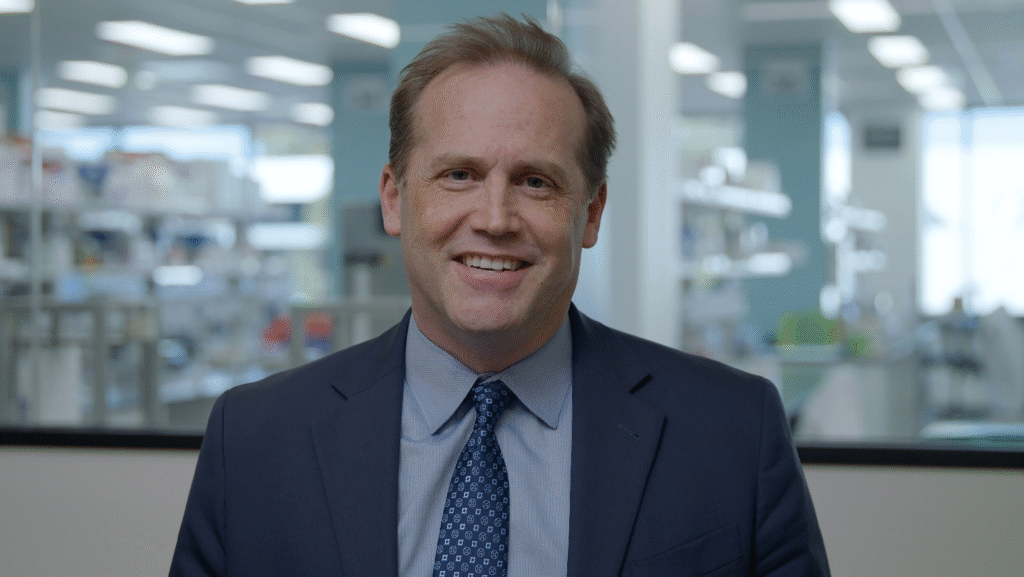
Payne was a scientist who not only made important technical contributions but also made a reputation, too, for the way that he presented them. He has been staying visible via places like LinkedIn, interviews, and business podcasts. In a 2021 interview released by Business Today, he outlined the new model of biotech leadership as “the Uberification of mRNA”, which is a metaphor that implies industry innovation and speedy responsiveness, changing the way things are typically done. That is how Payne perceives innovation to be a continuous process of change that needs the balancing act of long-term planning and short-term pivots.
His LinkedIn feed offers a steady stream of updates that run the gamut from technical innovations to regulatory breakthroughs. By use of these posts, Payne has expressed a preference for plain, earthy communication. While most industry giants prefer investor-oriented press releases, Payne has frequently styled his announcements in a way that is as suitable for peers and non-experts as it is for investors. The messaging style is an attempt to demystify parts of biotechnology without sacrificing scientific accuracy.
Professionally, Payne has a career spanning work at Merck Research Laboratories, DuPont Pharmaceuticals, and Bristol-Myers Squibb. These experiences provided him with the opportunity to work in the initial phases of drug discovery, with exposure to medicinal chemistry, preclinical development, and interdisciplinary research. In 2013, he co-founded Arcturus Therapeutics in San Diego, California. The firm became known for its LUNAR and STARR proprietary RNA delivery and amplification platforms, respectively, and subsequently for creating KOSTAIVE, the first approved self-amplifying mRNA COVID-19 vaccine in the world.
Arcturus also expanded its RNA platforms into rare genetic disorders. Payne led the firm in developing programs for ornithine transcarbamylase deficiency and cystic fibrosis, leveraging its RNA technologies from infectious disease into chronic, genetically driven conditions. This expansion of the firm’s product scope has been fostered through a strong patent base, with more than 500 registered patents and patent applications worldwide as of 2025. These filings include RNA delivery technologies, saRNA systems, and therapeutics in various regions such as the United States, Europe, Japan, and China.
However, Payne’s leadership narrative is not smooth sailing. In 2018, he was briefly ousted from serving as CEO of Arcturus because of internal board conflicts. The incident gained the attention of the public and created uncertainty regarding the direction of the company. A settlement eventually reinstated him to the top job. He resumed his dual position as CEO and scientific executive, still influencing the technical roadmap of the company while assuring his financial backers. During this time, while his communication was still primarily scientific, even through organizational disruption.
In media engagements after the reinstatement, Payne was known to accentuate messages of resoluteness and long-termism. He had made no direct mention of the boardroom scandal, choosing instead to focus on company goals and successes in science. Shifting the conversation away from the firm’s leadership crisis to Arcturus’s platform, he may have been able to solidify the company identity at a time when it needed an anchor. Through 2025, Arcturus has added manufacturing capacity and scaled clinical trials in the RNA therapeutic space.
He is still listed on search engines, like Google Scholar and ResearchGate, verifying that he is still engaged with academic and industrial research. Meanwhile, his corporate business puts him in the category of a new breed of biotech leaders who need to communicate across an audience, from scientists, regulators, and investors to the general public.
Payne’s professional identity has been heavily formed by the international biotech world. His collaborations with companies like Meiji Seika Pharma in Japan and CSL Seqirus reflect a model that believes innovation to be international. These partnerships not only introduced Arcturus’s technologies into new geographies but also positioned Payne in conversation with international stakeholders about mRNA and RNA-based therapeutics.
Joseph E. Payne’s career, in its overall shape, charts the increasingly hybridized character of 21st-century biotech leadership. Formal education and lab training are the foundation, but communication, strategy, and public confidence also come into play. From his early Calgary beginnings to his current position as CEO at Arcturus Therapeutics, Payne’s path is a map of the interaction between individual incentive and scientific vision in a high-pressure, high-stakes business.



Leave a Reply